
 Eng
Eng  Rus
Rus  Ukr
Ukr Revolution in Weight Management: How New Drugs Are Changing the Approach to Obesity Treatment

A large-scale study showed that tirzepatide outperforms semaglutide in weight loss effectiveness by 47%. What does this mean for patients, and how should therapy be chosen?
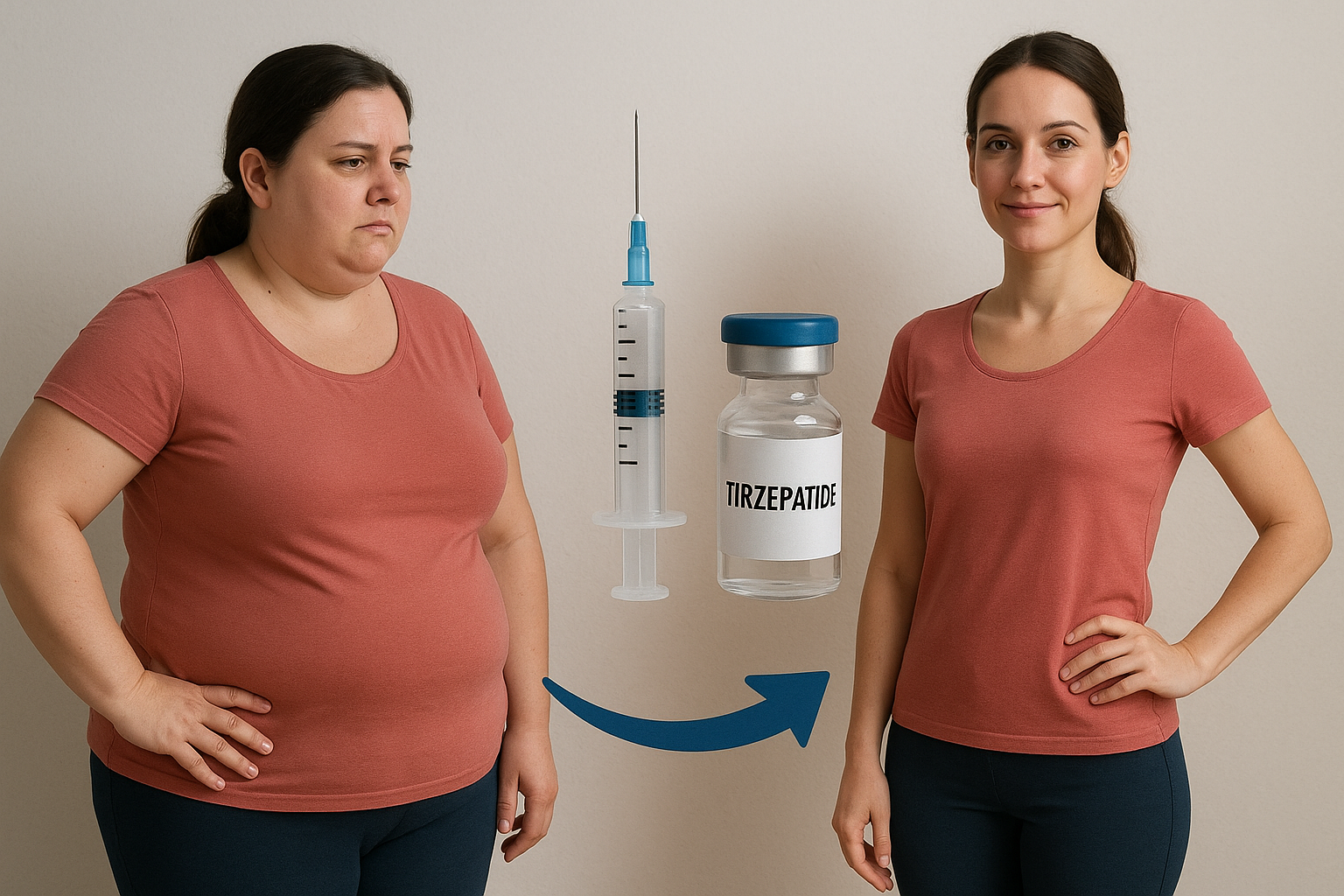
Anna K., 42 years old, came to our clinic seeking weight management after years of unsuccessful attempts to lose weight on her own. Her BMI was 38, waist circumference — 112 cm. "I’ve tried every diet, went to the gym, but the weight always came back. I heard about new weight-loss injections, but I’m afraid of side effects," she said during her initial consultation.
Anna’s story is typical of many of our patients. Until recently, medical options for weight management were limited, but the emergence of a new generation of incretin-based drugs has drastically changed the situation.
From Understanding the Problem to a Revolutionary Solution
For a long time, obesity was viewed as a problem of willpower and lack of discipline. Modern science has shown it is a complex metabolic disease linked to dysregulation of the hormonal systems that control appetite and satiety.
The breakthrough came with the discovery of incretin hormones — natural appetite regulators produced in the gut in response to food intake. Researchers found that in people with obesity, this system often functions improperly.
In May 2025, results of the largest comparative study, SURMOUNT-5, were published in the prestigious New England Journal of Medicine, creating a sensation in the medical community.
Two Drugs — Two Treatment Philosophies
Semaglutide (Ozempic)
The first truly effective weight-loss medication. It mimics the action of GLP-1 hormone, slowing gastric emptying and sending satiety signals to the brain.
Results: weight reduction of 15–17% over 1.5 years of therapy.
Tirzepatide (Mounjaro)
A next-generation drug with a fundamentally different approach. It activates two hormonal pathways simultaneously: GLP-1 and GIP (glucose-dependent insulinotropic polypeptide).
Advantage: effects on fat cells via GIP receptors.
"Imagine an orchestra where previously only one violin played, and now a whole string quartet has joined in," explains our leading endocrinologist. "GIP receptors are not only in the pancreas but also in fat cells, which explains tirzepatide’s additional fat-breaking effects."
Numbers That Changed Everything
The SURMOUNT-5 trial was the largest head-to-head comparison of the two drugs. 751 patients with obesity but without diabetes were divided into two groups and monitored for 72 weeks.
The results exceeded all expectations:
Weight loss:
- Tirzepatide: 20.2% (an average of nearly 23 kg)
- Semaglutide: 13.7% (an average of 15 kg)
Waist reduction:
- Tirzepatide: 18.4 cm
- Semaglutide: 13.0 cm
Most striking: one in five patients on tirzepatide (19.7%) lost more than 30% of their initial body weight, compared to only 6.9% on semaglutide.
For perspective: if a patient weighed 120 kg, a 30% reduction means a loss of 36 kg and a final weight of 84 kg. This is a life-changing result comparable to bariatric surgery.
Real Stories from Our Patients
Anna K. (continued): After a thorough examination and consultation with our endocrinologist, therapy with tirzepatide was initiated. After 6 months of treatment, she had lost 18 kg, and her waistline decreased by 14 cm.
"For the first time in many years, I don’t constantly think about food," Anna shares. "The craving for sweets is gone, portions have become naturally smaller. At the same time, I have enough energy for an active life."
Mykhailo P., 38, IT company executive: "My job involves constant stress and snacking. I gained 25 kg in a year. Tirzepatide helped me not only lose excess weight but also change my eating habits. Now I can work without constantly thinking about my next meal."
Safety First: What You Need to Know
Any effective drug has side effects, and incretin agonists are no exception. The most common are nausea, diarrhea, constipation, and reduced appetite. They usually appear in the first weeks of treatment and gradually subside with proper medical management.
Interesting fact: in the SURMOUNT-5 trial, fewer patients discontinued treatment due to side effects in the tirzepatide group (2.7%) compared to the semaglutide group (5.6%), despite the stronger effect of tirzepatide.
Absolute contraindications:
- Family history of medullary thyroid carcinoma
- Multiple endocrine neoplasia syndrome
- Pregnancy and breastfeeding
- Severe kidney or liver disease
Individualized Approach: The Art of Personalized Medicine
In our clinic, every patient undergoes a comprehensive evaluation before starting therapy. Our protocol includes:
Laboratory diagnostics:
- Comprehensive blood biochemistry
- Thyroid hormone profile
- Inflammatory markers
- Assessment of insulin resistance
Instrumental tests:
- Bioimpedance body composition analysis
- Abdominal ultrasound
- ECG and blood pressure measurement
Specialist consultations:
- Endocrinologist for drug and dosage selection
- Dietitian for personalized nutrition planning
- Cardiologist and gastroenterologist if needed
Therapy always begins with the lowest dose, gradually increasing. For tirzepatide, we start at 2.5 mg weekly, raising the dose every 4 weeks to the maximum tolerated (usually 10–15 mg). This approach minimizes side effects and ensures better tolerance.
Comprehensive Approach: More Than Just an Injection
Prescribing medication is only part of a successful weight-loss program. At our clinic, we apply an integrated approach:
- Dietary support — personalized nutrition plans tailored to drug effects
- Psychological support — addressing eating behavior and emotional triggers of overeating
- Aesthetic procedures — skin quality improvement, cellulite treatment
- Physiotherapy and exercise therapy — preserving muscle mass and accelerating weight reduction
Health Economics: Investing in Quality of Life
The cost of incretin agonist therapy may seem high, but it should be considered in the context of long-term benefits. Obesity is linked to increased risk of multiple diseases.
According to international research: every kilogram lost reduces annual healthcare costs by about 2000–3000 rubles due to decreased need for comorbidity treatment.
Moreover, improvements in quality of life, self-esteem, and productivity are invaluable. Many patients report better sleep, increased libido, and normalized blood pressure within the first months of therapy.
Personalized Programs at Mei
Taking into account each patient’s individual characteristics, we have developed several programs:
"Basic Program"
Includes initial endocrinologist consultation, necessary tests, drug and treatment plan selection, and monthly monitoring for the first 3 months.
"Comprehensive Program"
Additionally includes dietitian consultations for personalized nutrition planning, psychological support, and basic aesthetic procedures for skin improvement.
"VIP Program"
Provides full medical support, including consultations with all specialists, extended testing, personalized diet and exercise programs, and a full range of body-contouring procedures.
A Look into the Future: What Awaits Weight-Loss Medicine
The results of SURMOUNT-5 are only the beginning of a new era in obesity treatment. Studies are already underway on triple-action drugs targeting GLP-1, GIP, and glucagon receptors simultaneously.
At the same time, personalized approaches based on genetic testing are being developed to predict individual responses to therapy. In the near future, we will be able to determine in advance which drug will be most effective for each patient.
Artificial intelligence is already helping analyze large datasets to optimize treatment. Mobile apps allow real-time tracking of weight dynamics, eating habits, and side effects.
Conclusion: Time to Act
The revolution in obesity treatment is happening right now. For the first time in medical history, we have drugs capable of providing sustainable 20–30% weight loss without surgery.
But it is important to understand: success depends not only on the drug but also on the correct treatment approach. Qualified medical supervision, individualized therapy selection, and addressing eating behavior are all keys to success.
If you’ve been considering serious weight management, now may be the right time. Modern drugs open new opportunities, but time is irreplaceable. Every day of delay is a missed chance to start a new, healthier life.
Our clinic’s team of specialists has years of experience with incretin agonists. We are ready to provide full diagnostics, select the optimal therapy, and guide you throughout your journey to success.
Remember: obesity is not a life sentence but a diagnosis that can now be effectively treated. The first step toward change is booking a consultation. Take it today.